Shoe Configurator
Bespoke shoes online, without the expert standing next to you. How do you keep the confidence?
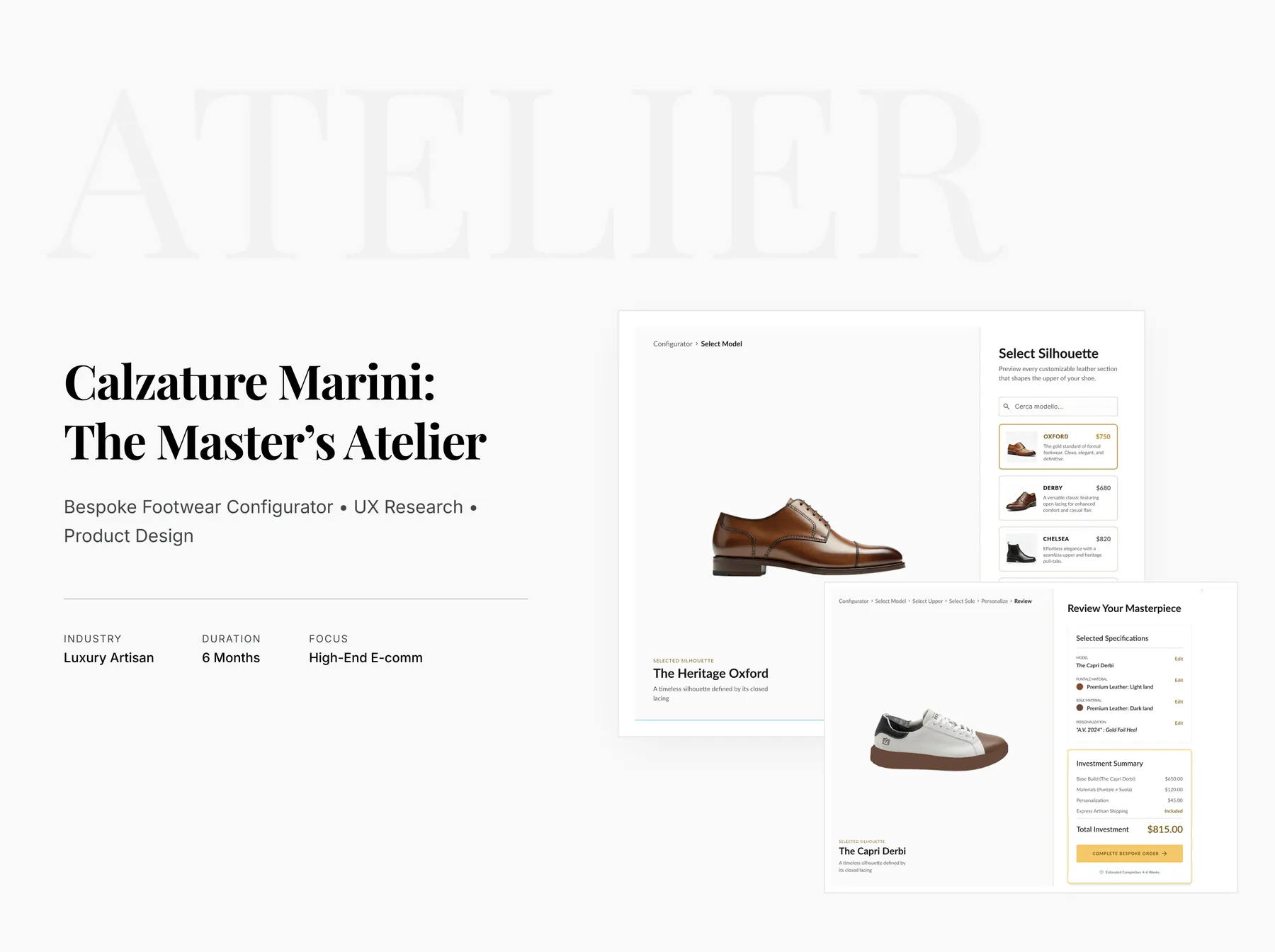
Overview
Buying bespoke shoes online is nothing like buying ready made ones. People need to feel that every choice shapes the final product, without feeling lost. This project takes the guided, in store experience and turns it into a digital configurator that feels intuitive, transparent and premium, and respects the craftsmanship behind it.
The problem
In a bespoke shop, an expert holds your hand. Online, that person disappears and you are left alone with silhouettes, materials, finishes and personalisation. Three things kept coming up: too many options exhaust people, users cannot see how their choices change the final shoe, and complex configurators care more about technical flexibility than about feeling premium. The challenge was not adding more customisation. It was making complexity feel effortless.
Process
Inception
Context
Luxury footwear is personal. People pay for craftsmanship, materials and individuality. In store, an expert guides every choice. Online, the challenge is keeping that confidence without losing simplicity or the premium feel.
Goals
- A journey that feels guided rather than overwhelming
- Less cognitive load by splitting decisions into steps
- Immediate visual feedback after every selection
- The perception of craftsmanship throughout
- More confidence before purchase through transparent choices
Discover
Research
- Competitive analysis of luxury footwear configurators
- Customization flows in fashion, automotive and furniture
- Heuristic evaluation of existing shoe configurators
- Literature on cognitive load, progressive disclosure and online decision making
Findings
- Too many options at once slow decisions and raise uncertainty
- Users rely on continuous visual feedback
- Small sequential decisions feel approachable
- Premium comes from clarity and confidence, not from every option at once
Personas
The first time buyer wants guidance and visual feedback without feeling boxed in. The returning customer wants quick access to options, full control and honest pricing.
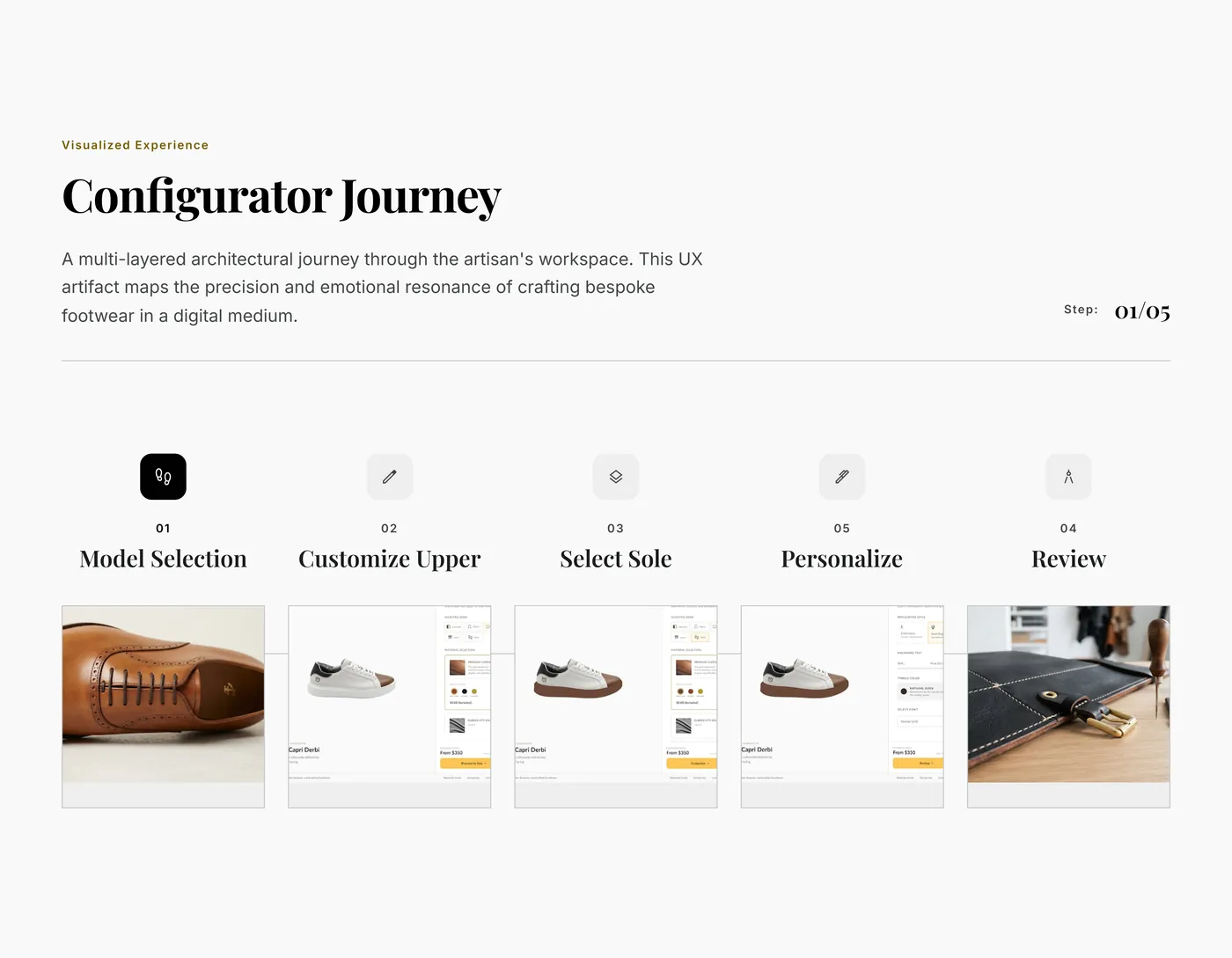
Design
Approach
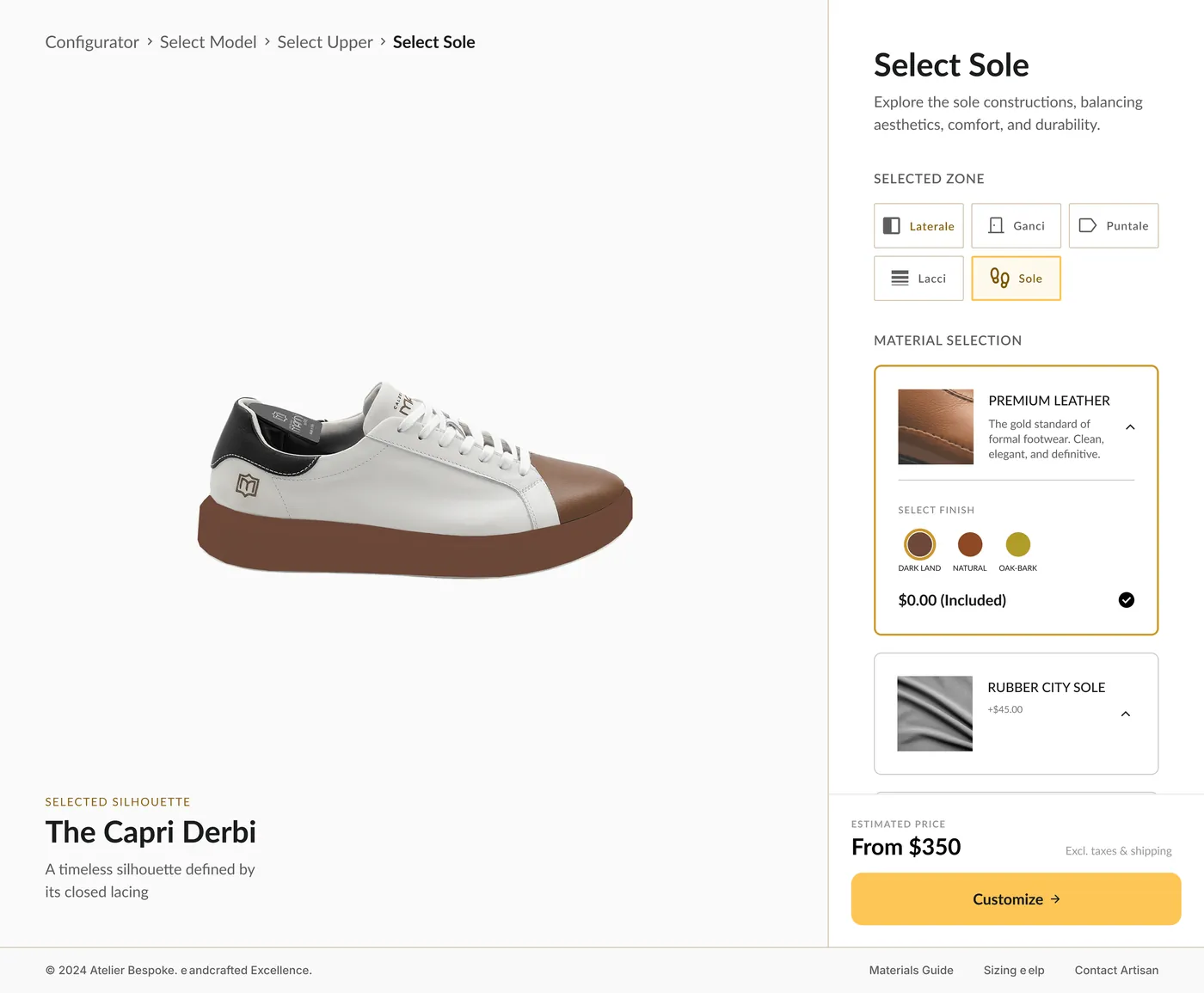
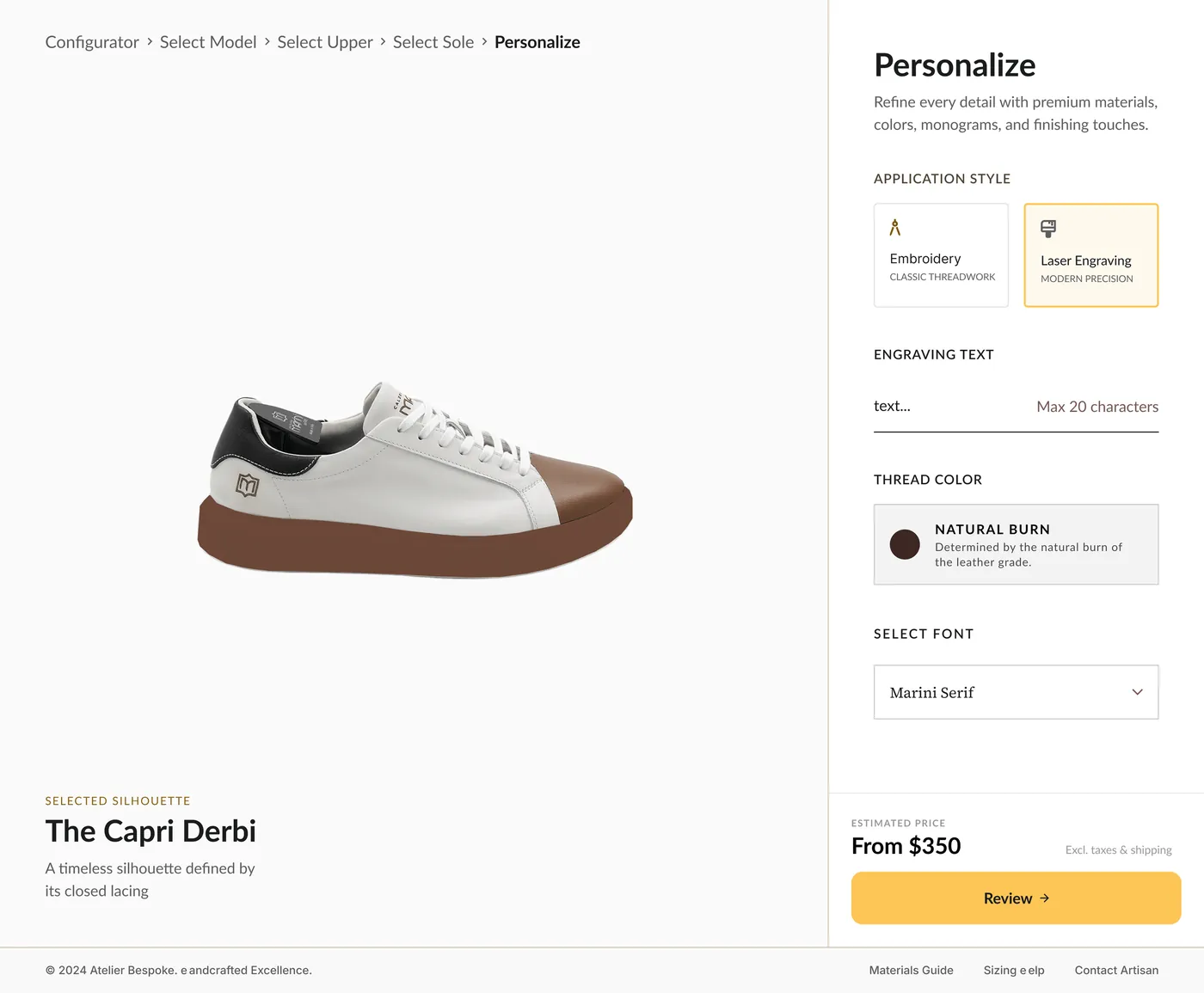
I designed customisation to feel effortless. Progressive steps and constant visual feedback let people focus on one decision at a time without losing sight of the final shoe.
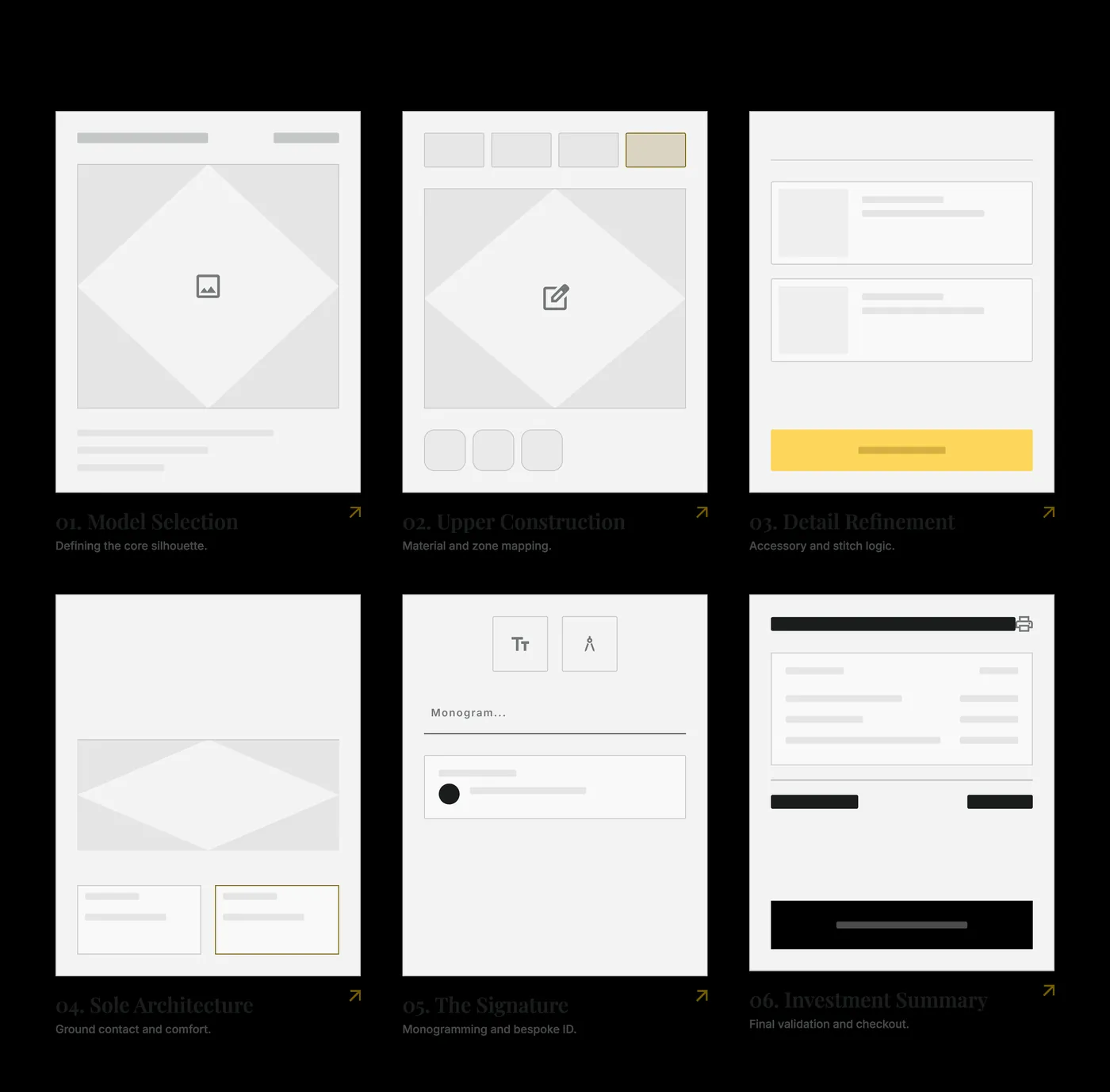
Test
Methods
- Heuristic evaluation throughout the process
- Interaction patterns reviewed against established UX principles
- Iterative refinement through prototype reviews and comparison of alternatives
Insights
- Progressive steps reduced perceived complexity
- Live product updates increased confidence
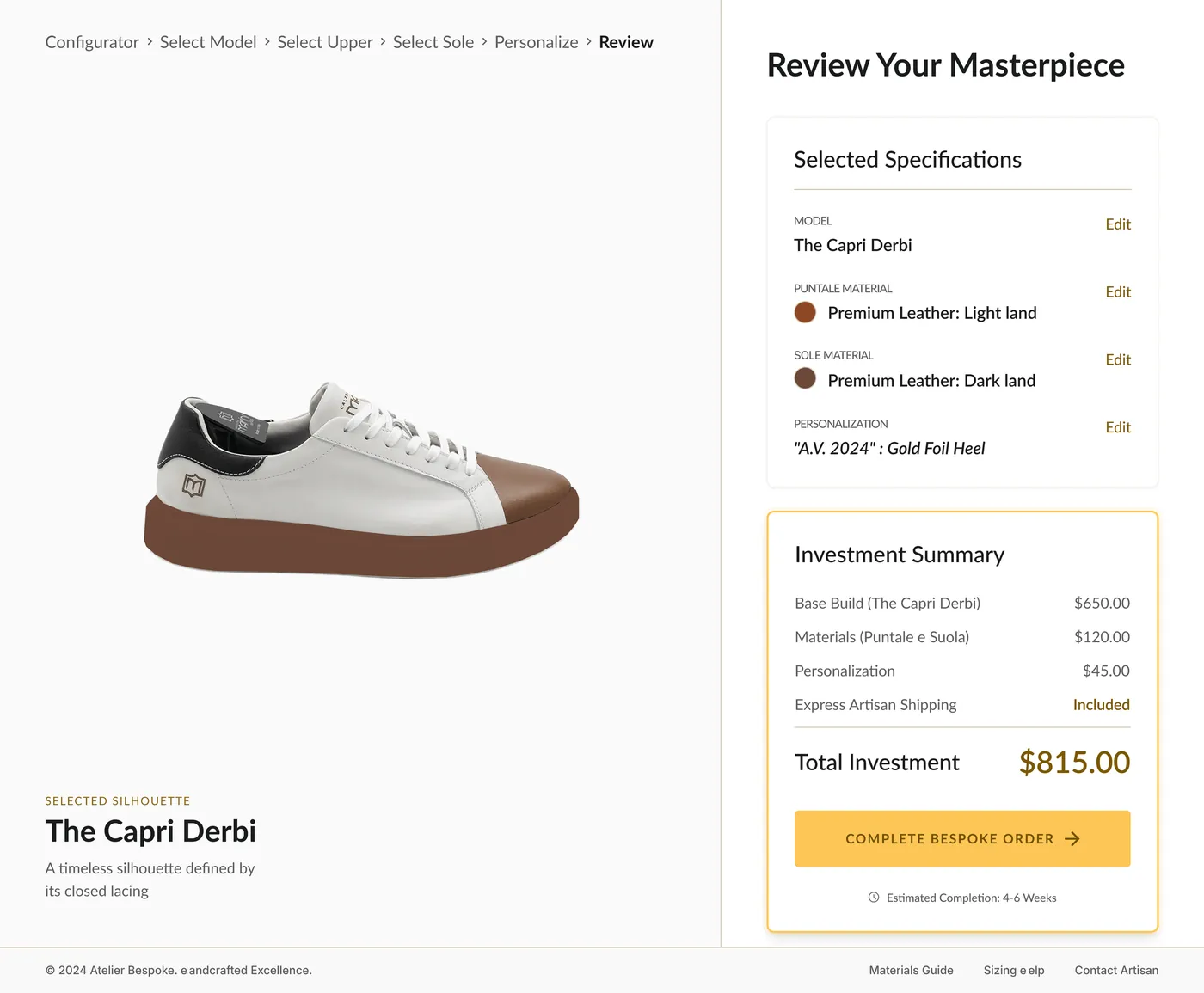
- A final review screen let users validate choices before purchase
Develop
Specs
- Figma for wireframes, UI and interactive prototypes
- A design system of reusable customization components
- Responsive layouts for desktop and mobile
- Developer ready specifications and interaction documentation
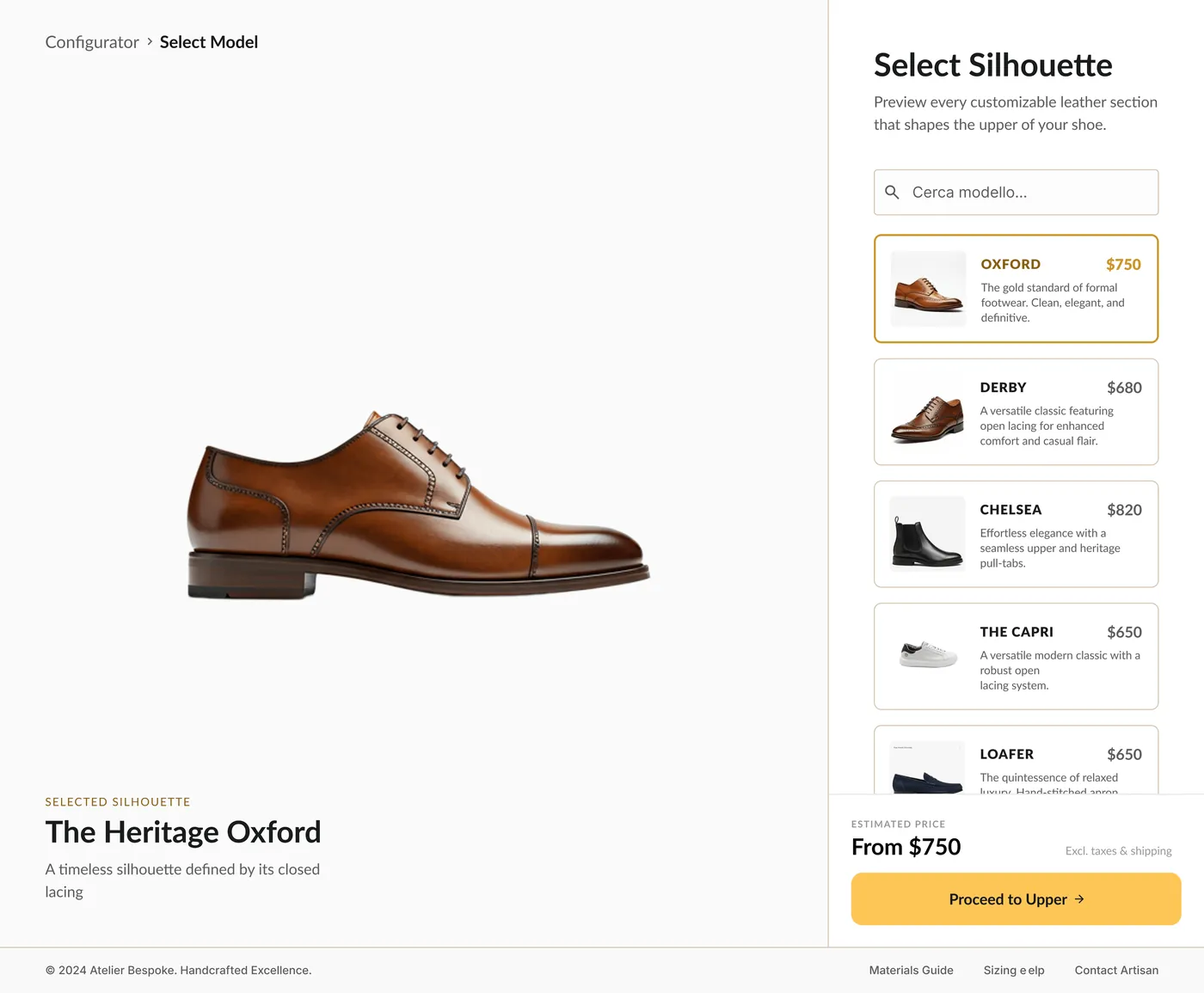
Measure
Success looks like
- Users complete the journey without abandoning it
- Each step feels clear and easy to understand
- Users review their configuration with confidence
- The experience communicates the craftsmanship
Gallery
Outcome
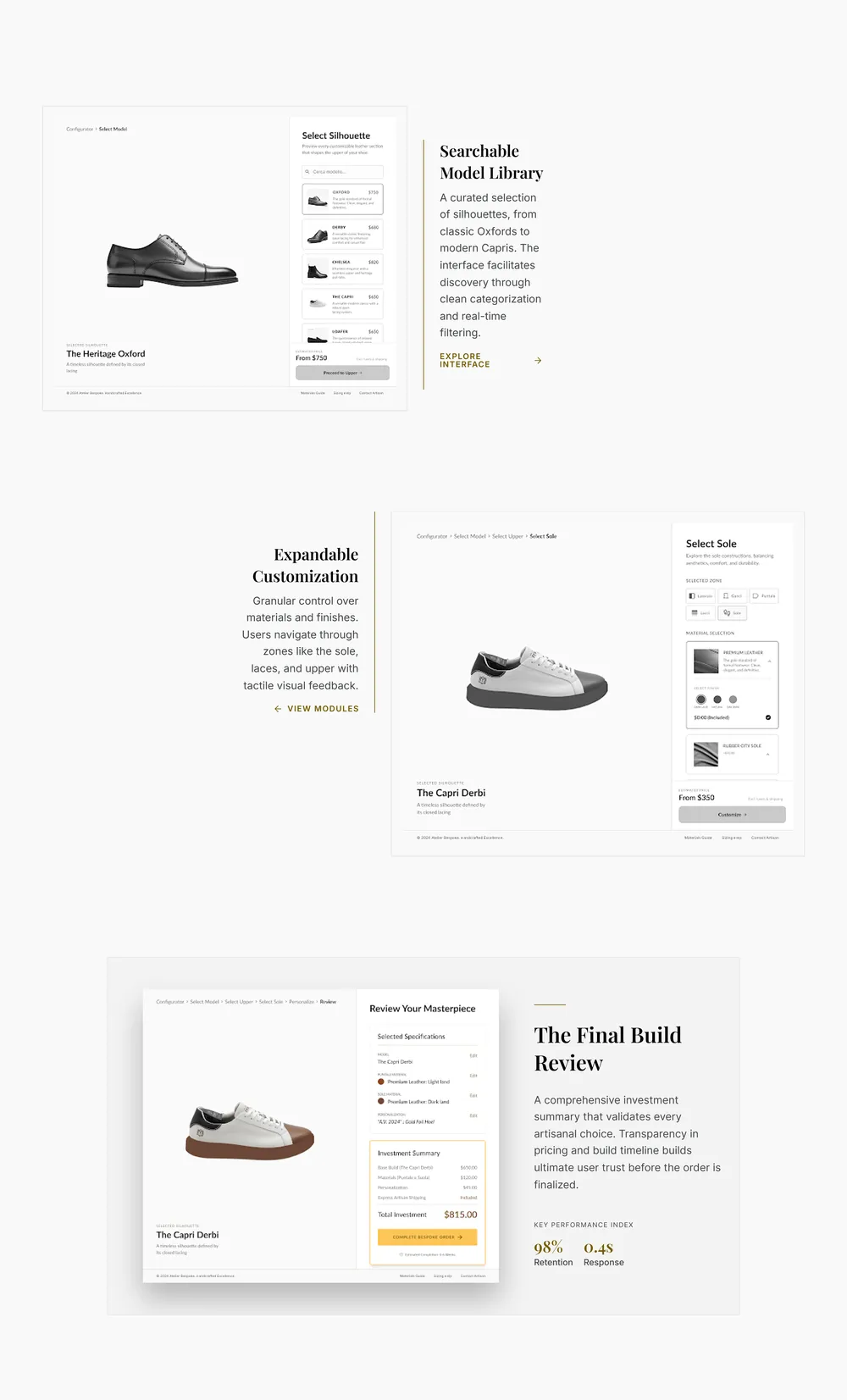
The concept turns a guided, in store experience into a digital journey that feels simple, transparent and premium. Step by step choices and constant visual feedback help people personalise handcrafted shoes with more confidence.
Learnings
Information architecture shapes everything. Split customisation into meaningful decisions and complexity becomes manageable without taking freedom away. It also confirmed something I keep coming back to: design around how users think, not around how the product is built.